
In 1846, the founders failed to build what they came to build.
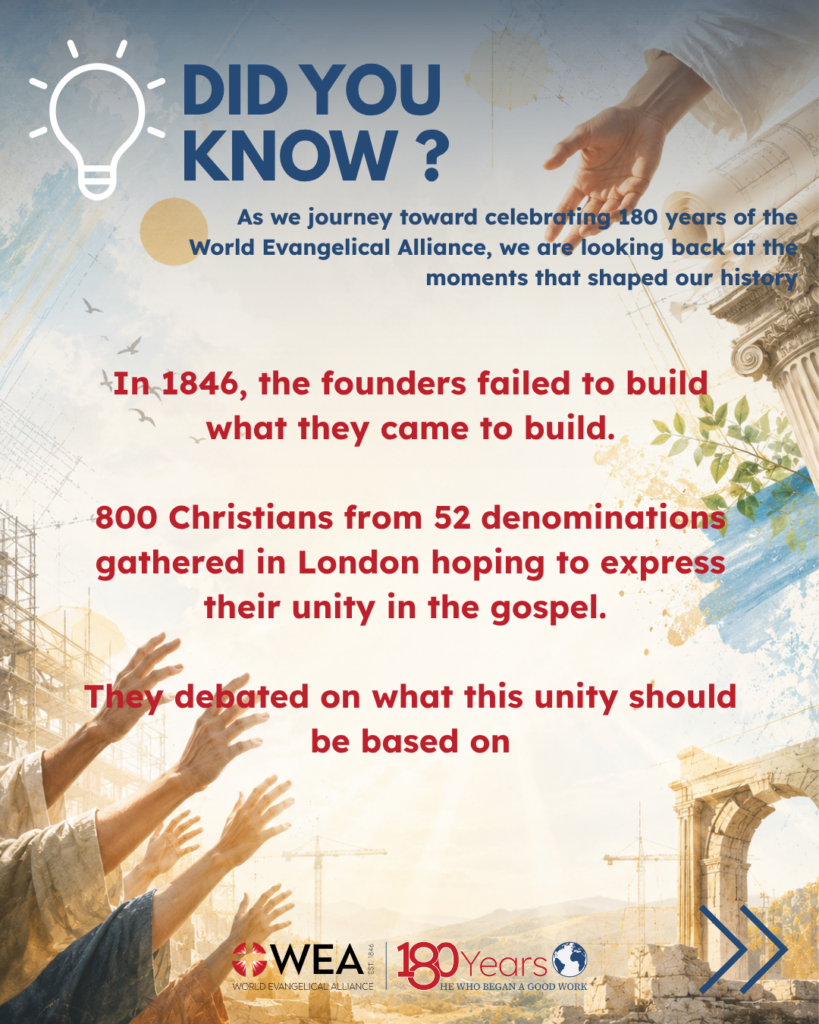
In 1846, the founders failed to build what they came to build. 800 Christians from 52 denominations gathered in London hoping to express their unity in the gospel. They debated on what this unity should be based on.
Instead of one central body governing everyone, autonomous national Evangelical Alliances began to take shape — connected by shared faith, but free to serve within their own national contexts. Unity would not require uniformity.
This principle became part of the movement’s identity. When leaders from 21 countries formed the World Evangelical Fellowship in 1951, they carried forward the original 1846 Statement of Faith. Then, in 1953, they reaffirmed the full autonomy of each national body.
As the movement grew, its leadership became more global too. By the 1960s, WEF leaders were calling for greater recognition of voices from Africa, Asia and Latin America. In 1968, I. Ben Wati of India became the first non-Western President — an important step toward a truly international fellowship.
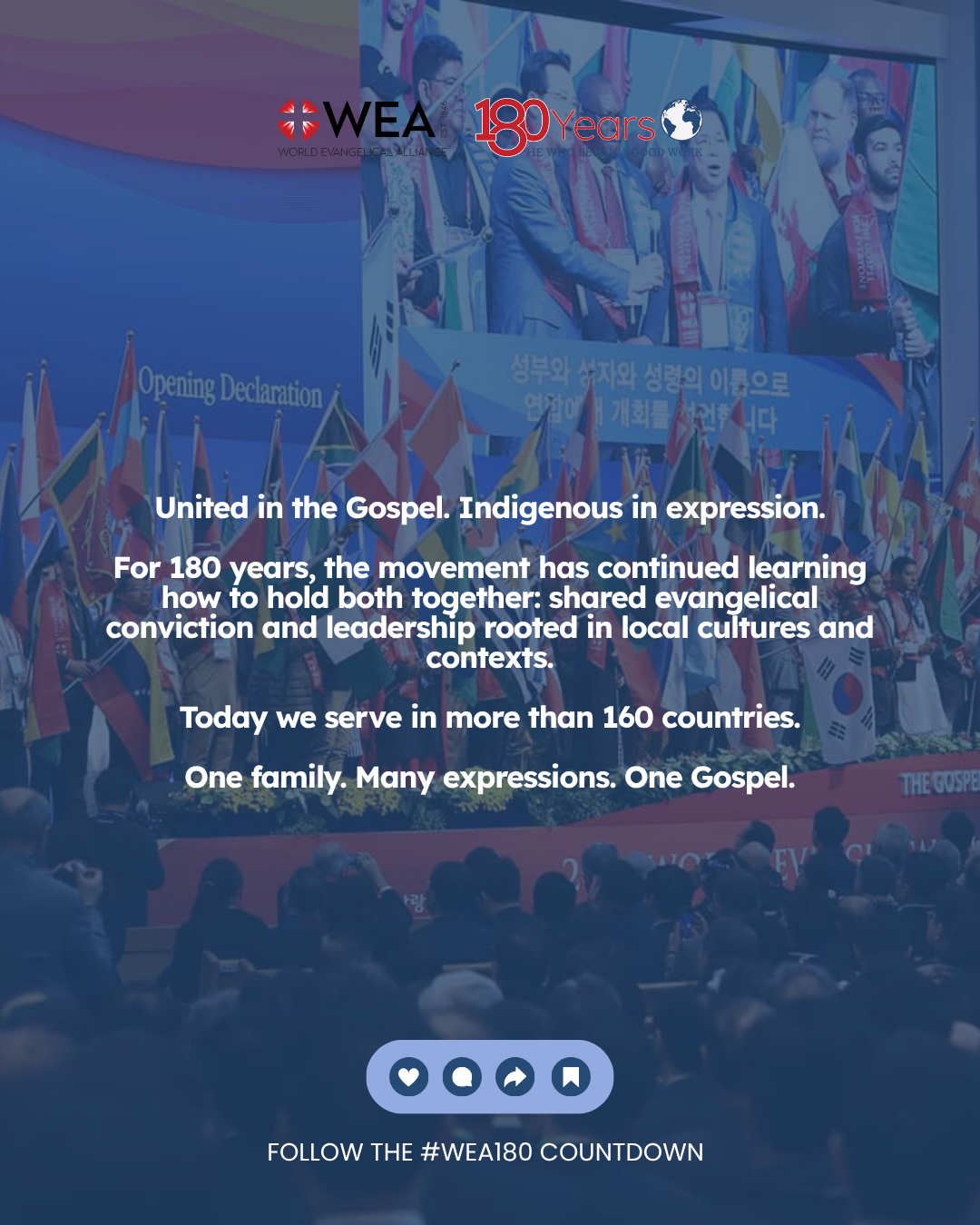
United in the Gospel. Indigenous in expression.
For 180 years, the movement has continued learning how to hold both together: shared evangelical conviction and leadership rooted in local cultures and contexts. Today we serve in more than 160 countries. One family. Many expressions. One Gospel.
Sources
Howard, David M. The Dream That Wouldn't Die. The Birth and Growth of the World Evangelical Fellowship 1846-1986 Vol. 1 : Yearbook for Evangelical Theology, Volume 1, 1987.
Randall, Ian and David Hilborn. One Body in Christ. The History and Significance of the Evangelical Alliance. Great Britain: Paternoster Press, 2001.
Parker, David. Discerning The Obedience of Faith. A Short History of the World Evangelical Alliance. Theological Commission. Bangalore: Theological Book Trust, 2005.
Ewing, John W. Goodly Fellowship. A Centenary Tribute to the Life and Work of the World's Evangelical Alliance 1846–1946. World of Theology Series 23. Theological Commission. Verlag für Kultur und Wissenschaft 2022.


Stay Connected